

Guide
The complete guide to online dating
How to date online without burning out: decide what you want, build a profile that works, start better conversations, plan first dates and stay safe.
Updated · 12 min read · By the getme team
30%
Who this guide is for
This guide is for anyone who wants to date online and would like it to feel less like a second job. You might be new to apps, coming back after a long relationship, or simply tired of conversations that go nowhere. It covers the whole arc: deciding what you want, building a profile that attracts the right people, starting and keeping good conversations, moving to a first date, and knowing when to keep going or call it.
It is written for people in Australia, the UK, the US, Canada, Ireland and Europe, and most of the advice works anywhere. Where things differ by country, such as helplines or how to report a scam, we point you to the local page. Nothing here is a trick or a script. The aim is to help you show up as yourself, meet people who suit you, and stay safe while you do it.
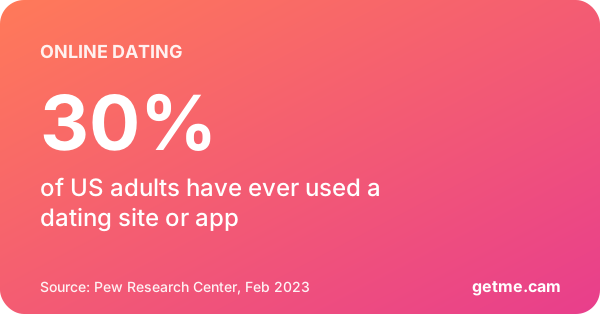
A quick note on numbers: online dating is mainstream. In a Pew Research Center survey published in February 2023, 30% of US adults said they had ever used a dating site or app, rising to 53% of adults under 30. You are not unusual for trying it, and you are not behind if it takes a while.
Decide what you actually want
The single biggest improvement most people can make happens before they open an app: being honest with themselves about what they are looking for right now. "Something serious", "something casual", "see what happens" and "new friends first" are all fine. Problems start when your profile says one thing and your behaviour says another, or when you are not sure and leave it to the other person to guess.
Try writing three short lines for yourself, not for your profile:
- What would a good outcome look like in three months? A partner? A few fun dates? More confidence?
- What are your non-negotiables? Think of values and life plans rather than height or job title: wanting children or not, smoking, religion, where you want to live.
- How much time can you realistically give this each week?
Your answers shape everything else. If you want a relationship, you will put more into your profile and conversations and be quicker to move to a date. If you are mostly after company, say so; people who want the same will appreciate it, and people who don't can move on without hurt feelings.
On getme you choose an intent (dating, friends, or both) and it is shown on your profile. Matching weighs intent both ways, so people who want the same kind of connection are more likely to see each other.
Build a profile that works
A good profile does two jobs: it helps the right people recognise you, and it gives them something easy to reply to. It does not need to impress everyone. In fact, a profile that tries to appeal to everyone usually appeals to no one in particular.
Photos
Photos do most of the work in the first few seconds. A few rules that consistently help:
- Lead with a clear, recent photo of your face, on your own, smiling or relaxed, in natural light. No sunglasses, no heavy filters.
- Add one full-length photo so people have an honest picture of you. This builds trust and avoids awkward first meetings.
- Show your life, not just your face. A photo doing something you love (cooking, hiking, playing music, at the footy) tells a story and gives people an opening line.
- Avoid group shots as your first photo. If you include one, make it obvious which person you are.
- Keep them current. A rough guide is nothing older than two years, and nothing from before a big change in how you look.
On getme you can selfie-verify. A real person reviews the check, and the blue badge only appears once it has been done. Verified profiles tend to get more trust and more replies, and verification also makes it harder for scammers to borrow someone else's photos.
Words
Your bio and prompts are where you stop being a set of photos and become a person. Some approaches that work:
- Be specific. "I love travel" says very little. "Still thinking about a bowl of pho I had in Hanoi in 2019" gives someone a question to ask.
- Mix in what you're like day to day, not just highlights. Weekend routines, the show you're rewatching, the café you go to.
- Say what you're looking for in a sentence. It filters gently and saves everyone time.
- Keep negativity out. Lists of what you don't want ("no drama", "no time-wasters") tend to put off the people you'd actually like.
- Leave hooks. End a prompt with something people can respond to: a strong opinion on pineapple pizza, a question, a challenge.
If you get stuck, use a template. getme has "Use template" buttons on the bio and listing fields. They give you a structure to fill in, never a ready-made fake profile.
Preferences and distance
Set your age range, distance and other filters to what you genuinely want, but don't over-filter. Very narrow ranges can leave you with almost nobody to see, especially outside the biggest cities. A sensible approach is to start a little wider than you think and narrow down if you're getting too many matches you're not interested in.
Distance matters more than people expect. A match who lives 45 minutes away by public transport can be lovely and still be hard to see regularly. getme shows people in your own neighbourhood first, then your city, then further out up to the distance you set, so dates stay realistic.
How matching works and how to use it well
Most apps, getme included, decide who to show you using a mix of your settings and signals about who is likely to be a good fit. On getme, the compatibility score you see on cards takes into account distance, whether your age and gender preferences fit both ways, what you're each looking for, shared interests, how recently someone has been active, mutual friends and verification. It's a guide, not a verdict. A 60% match can turn into the best date you've had.
What helps you get seen by the right people:
- Complete your profile. Profiles with several photos, prompts and interests give the system more to go on and give people more reasons to say yes.
- Be active, but you don't need to be always on. Recent activity is a signal because people who haven't logged in for weeks rarely reply.
- Be selective with likes. Liking everyone tends to bring matches you don't want to talk to, which wastes your time and theirs.
- Use comments on likes. Liking a specific photo or prompt with a short comment gives a conversation a head start.
Starting conversations
The first message is where many matches fade out. The fix is simple: say something that is about them, not a generic opener.
Good first messages tend to:
- Reference something specific on their profile ("Is the dog in photo three yours or a borrowed prop?").
- Ask an open question that's easy to answer ("What's the best thing you've eaten this month?").
- Be short. Two or three lines is plenty.
Less effective openers include just "hey", a compliment only about looks, or a long paragraph about yourself. None of these are terrible, but they make it harder for the other person to reply.
Keeping it going
Good conversations are a bit like a rally: each message gives the other person something to hit back. If you're only answering questions, add one of your own. If you're only asking, share something too. Voice notes can help you get a feel for someone sooner, and so can a short video call before you meet if you both like that.
Watch the pace. Most people prefer to move from chatting to meeting within a week or two of a good conversation. Let it drag on for weeks and you can build up an imagined version of each other that a real meeting can't live up to.
When it fizzles
Not every match will talk, and not every conversation will last. That's normal and usually says more about timing than about you. If someone goes quiet, one light follow-up is fine. After that, let it go. If you're the one who's lost interest, a short, kind message ("I've enjoyed chatting but don't think we're a match, best of luck") is better than disappearing, and it takes ten seconds.
Planning a first date
The best first dates are short, public, cheap and easy to extend if it's going well. Coffee, a walk with takeaway drinks, a market, a gallery, a casual bar early in the evening. Dinner can feel like a big commitment for a first meeting; you can always suggest food afterwards if you're both enjoying yourselves.
A few practical points:
- Choose somewhere you know and can get home from easily, ideally near public transport.
- Agree the time and place in the app so there's a record.
- Tell a friend who you're meeting, where and when, and check in afterwards.
- Arrange your own transport. You don't need to accept a lift or share an address yet.
- Keep your drink with you and stop if you're starting to feel more affected than you expect.
Our dating safety guide goes into more detail, including red flags and what to do if something goes wrong.
On the date
You don't need a script. Ask questions you're genuinely curious about, listen to the answers, and share about yourself too. Phones away. It's fine to have a set end time ("I've got about an hour before I meet a friend"), which takes pressure off both of you.
If it's not going well, you can leave politely: "It's been nice to meet you, but I don't think we're a match. I'm going to head off." You don't owe anyone a longer explanation.
After the date
If you enjoyed it, say so the same day or the next. People like knowing where they stand. If you didn't feel a spark, a brief, kind message is better than silence. If someone tells you they're not interested, thank them and move on; arguing rarely changes anyone's mind and can make you look worse.
Paid features: do you need them?
On most apps, including getme, the core experience is free: creating a profile, matching and chatting. Paid plans usually add convenience: more likes, seeing who liked you, boosts or travel modes. They can be worth it if you're short on time and active, but they won't fix a weak profile or an unclear idea of what you want.
Before paying for anything, check the price in your currency, whether it renews automatically, and how to cancel. On getme, prices are shown in your local currency, you can cancel any time in Settings, and you keep paid features until the end of the period you've paid for. We never charge a card without a confirmed payment from our payment provider.
Choosing an app
Different apps suit different people. Some focus on long-term relationships, some on volume, some on specific communities. We've written honest, sourced comparisons for Australia, the UK and Canada that include getme alongside other well-known apps. It's fine to use more than one; just keep your profile honest and consistent across them.
What to look for in any app:
- Clear rules on age (18+), harassment and fake profiles, and an obvious way to report and block.
- Verification options and a team that actually reviews reports.
- Transparent pricing and easy cancellation.
- A privacy policy that tells you what's collected and whether data is sold. getme does not sell personal data.
Looking after yourself
Online dating can be fun. It can also be tiring, and rejection, even from strangers, adds up. Some habits that help:
- Set limits. Pick a time of day to check messages rather than responding constantly.
- Take breaks. You can hide your profile for a week or a month. Your matches and chats stay.
- Notice patterns, not single events. One bad date means nothing. Ten conversations that end the same way might be worth reflecting on.
- Keep the rest of your life full. Friends, hobbies and rest make you happier and, as a side effect, better company on dates.
If dating is affecting your mental health, talk to someone you trust or a professional. Our country safety pages list free helplines, for example Australia, the UK, the US and Canada.
Dating in different places
The basics are the same everywhere, but local culture changes the details. In the US, it's common to date several people casually before becoming exclusive, and the "exclusive" conversation is usually explicit. In much of northern Europe, people tend to be direct, and splitting the bill is often the default. In Australia and the UK, a drink at the pub or a coffee is the classic first date. In big, spread-out cities like Los Angeles or Sydney, distance can make or break a match, so it's worth filtering by it.
getme has local pages for cities across Australia, the UK, the US, Canada and Europe, for example Berlin, Paris and Dublin. Each shows neighbourhoods and local tips.
Common mistakes to avoid
- Treating it like shopping. Swiping through people as if they were products makes you pickier and less happy. Slow down and read profiles.
- Waiting for perfect. Nobody matches every item on a list. Look for the things that matter most.
- Overinvesting before meeting. Weeks of daily messages can create expectations no real person can meet.
- Ignoring red flags because the chemistry is good. If someone pressures you, asks for money, or won't meet or video chat after weeks, take it seriously.
- Giving up after a bad week. Results usually come from steady effort over a couple of months, not a burst of activity.
A simple plan for your first month
- Week 1: Decide what you want, set up your profile with five or six good photos and two or three prompts, verify, and set realistic filters.
- Week 2: Like selectively, send specific first messages, and aim to suggest meeting with anyone you've had a good back-and-forth with.
- Week 3: Go on one or two short first dates. Reflect on what felt good.
- Week 4: Refresh your photos or prompts based on what people commented on, and keep going.
Frequently asked questions
How long should my bio be?
Long enough to say something specific about you and what you want, short enough to read in 20 seconds. Two to four short sentences plus a couple of prompts is a good target.
How many photos should I use?
Four to six is plenty. Lead with a clear photo of your face, include a full-length photo, and add a couple that show what you like doing.
Who should message first?
Whoever wants to. On getme anyone in a match can start the conversation. A specific opener works better than "hey" regardless of who sends it.
When should we meet?
Once you've had a good conversation and feel comfortable, usually within a week or two. A short video call first is a good option if you'd like extra reassurance.
Is online dating safe?
Most people have positive experiences, and risk can be reduced a lot with simple steps: meet in public, tell a friend, never send money, and report anything that worries you. Read our dating safety guide.
Do I need to pay to find someone?
No. Matching and chatting are free on getme. Paid plans add convenience, not better people.
Related pages
More guides
Use this stat
Source: Pew Research Center, Feb 2023. Free to embed with the credit link.