

Guide
Moving to a new city: the complete guide
Plan the move, find a place, sort the admin (including registration abroad), get to know your area and build a social life from scratch.
Updated · 12 min read · By the getme team
8.7%
Moving is common, but it's still a big deal
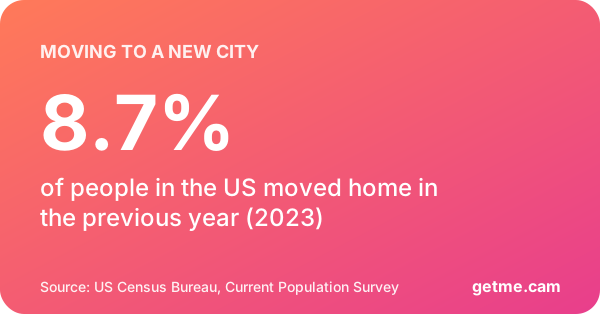
People move all the time, for work, study, love, family, cost of living or a fresh start. The US Census Bureau's Current Population Survey found that 8.7% of people in the US had moved home in the previous year (2023). Rates are similar or higher among young adults in Australia, the UK, Canada and Europe, and international moves have become more common too.
Common doesn't mean easy. Moving to a new city involves logistics (finding somewhere to live, setting up bills, registering with services), money, and a social reset. Many people underestimate the last part: leaving friends and routines behind and starting again can be lonely, even if the move is exciting.
This guide covers planning the move, finding a place to live, the admin you'll need to do, getting to know your new area, finding work and services, and building a social life from scratch. Where countries differ, we highlight what to check, and you'll find local pages for cities across Australia, the UK, the US, Canada and Europe.
Before you move: research and planning
Choosing a city and area
If you have a choice, consider:
- Cost of living, especially rent, transport and childcare.
- Commute to work or study.
- Lifestyle: walkability, green space, nightlife, schools, quiet.
- Community: are there people at your life stage, groups for your interests, a community from your home country or culture?
- Climate and seasons, which affect mood and activity more than many expect.
Neighbourhoods within a city can feel completely different. Our city pages list neighbourhoods and local notes, for example Toronto, Berlin, Lisbon and Manchester.
Visiting first
If possible, visit before you commit. Spend time in the areas you're considering at different times of day. Walk around, use public transport, go to a supermarket, sit in a café. Notice how it feels.
Budgeting for the move
Moving costs add up:
- Removalists or van hire, packing materials.
- Bond or deposit, plus first rent in advance.
- Connection fees for utilities and internet.
- Travel, temporary accommodation and storage.
- New furniture and household items.
- Lost income during the move.
Build a buffer. Things almost always cost more and take longer than planned.
Decluttering
Moving is the perfect time to get rid of things you don't need. Sell or give away items through local classifieds, donate to charity shops, and recycle. Fewer belongings means a cheaper, easier move.
Finding somewhere to live
Renting
Most people moving to a new city rent first, at least until they know the area.
- Search widely: rental platforms, agents, local classifieds and community groups.
- Book viewings early and go to several. In competitive markets, have documents ready: ID, proof of income, references, and a short introduction about yourself.
- Inspect carefully. Check water pressure, heating and cooling, mould, phone signal, noise, security and storage.
- Read the lease before signing: rent, bond, length, notice periods, who pays which bills, pets, and repairs.
- Protect your deposit. Many countries require deposits to be lodged with a government or approved scheme. Do a detailed condition report with photos when you move in.
House shares and rooms
Sharing is a great way to save money and meet people. Meet the household before agreeing, ask about house rules, bills and cleaning, and get a written agreement. Our classifieds safety guide covers how to avoid room scams.
Temporary accommodation
If you can't secure a lease before arriving, short-term rentals or serviced apartments give you time to look in person. They cost more, but avoid signing up for somewhere you haven't seen.
A timeline for your move
Eight to twelve weeks before
- Decide on the city and shortlist neighbourhoods.
- Set a budget and start saving a buffer.
- If moving countries, check visa, registration and pet requirements.
- Start decluttering and selling things you won't take.
Four to six weeks before
- Secure accommodation or book temporary accommodation.
- Book removalists or a van; get written quotes.
- Give notice on your current rental, as your lease requires.
- Start your job search if you need one.
Two weeks before
- Arrange utilities and internet at the new place.
- Set up mail redirection and start updating your address.
- Confirm moving day details and pack non-essentials.
Moving week
- Pack your essentials box, photograph meter readings, and clean your old home.
- Collect keys and do a detailed condition report with photos at the new place.
First month
- Register with a doctor and any required local office.
- Walk your neighbourhood and find your regular places.
- Join one or two regular activities and say yes to invitations.
Moving day logistics
- Book removalists or a van early, especially at month-end and in summer.
- Get written quotes and check insurance. Our hiring guide covers how to check providers.
- Pack an essentials box: chargers, toiletries, medication, a change of clothes, basic kitchen items, toilet paper, documents.
- Label boxes by room and contents.
- Take photos of meter readings at both properties.
- Clean your old place to get your deposit back, or book a cleaner.
The admin checklist
Moving involves a lot of updating. Make a list and work through it.
Before you move
- Give notice on your current rental and utilities.
- Arrange mail redirection.
- Update your address with your bank, employer, insurer, tax authority, doctor and other services.
- Transfer or cancel memberships and subscriptions.
- If moving countries, check visa requirements, vaccination rules for pets, and what you can import.
After you arrive
- Set up electricity, gas, water and internet.
- Register with a local doctor and dentist.
- Update your driver's licence and vehicle registration if required in your new state, province or country.
- Enrol to vote where applicable.
- Register children with schools or childcare.
- Find your nearest pharmacy, hospital and after-hours clinic.
Country-specific registration
Some countries require you to register your address with the local authority within a short time of moving. For example, Germany requires you to register your address (Anmeldung) at the local residents' office, and Sweden, Norway, Denmark and Finland have population registers that newcomers join to receive an ID number used for many services. The Netherlands requires registration with your municipality, which gives you a citizen service number (BSN). If you're moving countries, check the official government website for your destination early, because appointments can take weeks.
Money and banking
Sorting your finances early avoids a lot of hassle.
- Open a local bank account if you're moving countries. Many banks need proof of address and an ID number, which can create a chicken-and-egg problem; some digital banks are easier to open from abroad.
- Get your tax number, such as a tax file number in Australia, a National Insurance number in the UK, a Social Insurance Number in Canada, or a PPS number in Ireland, so you're taxed correctly from the start.
- Understand the cost of living. Track spending for the first two months; prices for the same things can be very different from home.
- Watch for rental and job scams aimed at newcomers. Never pay deposits for places you haven't seen, and never pay to get a job.
- Check your phone plan. A local SIM or eSIM is usually much cheaper than roaming.
Healthcare in a new place
- Register with a GP or family doctor soon after you arrive, before you need one.
- Know the difference between emergency departments, urgent care or after-hours clinics, and pharmacies, and when to use each.
- Check your entitlements. Public healthcare access depends on residency and visa status. Some countries require private health insurance for newcomers.
- Bring records. Copies of prescriptions, vaccination records and any medical history in English or the local language save time.
- Find mental health support if you need it. Moving is stressful, and early support helps.
Moving with pets
Pets need planning, especially across borders.
- Within a country, check your new rental allows pets and find a vet and a dog walker or sitter early.
- Between countries, rules on vaccinations, microchips, blood tests and quarantine can be strict and take months. Australia, for example, has particularly detailed import requirements. Start with your destination's official government guidance.
- Help them settle: familiar bedding, routines and gradual exploration of the new area.
Learning the local culture
Every city has unwritten rules: how people queue, tip, greet each other, split bills, and how direct or indirect conversation is. You'll learn most by observing and asking. Locals usually appreciate questions asked with curiosity rather than criticism. If the language is new to you, learning even a little makes daily life easier and helps you make local friends.
Getting to know your new area
The fastest way to feel at home is to know your local area well.
- Walk everywhere you can in the first few weeks. You'll discover shortcuts, cafés, parks and noticeboards.
- Find your "third places": a café, library, gym, park or pub where you can be a regular.
- Learn public transport. Get the right card or app.
- Shop locally. Becoming a familiar face at a market or local shop helps you feel part of the community.
- Follow local news and community groups to see what's happening.
- Join a local platform. On getme, people and listings near you appear first, so you'll see what's going on in your neighbourhood.
Finding work and services
If you're moving for work, you're set. If not:
- Start your job search before you move if you can, and tell employers your moving date.
- Look for local work through local platforms, agencies and walking in; our local jobs guide covers how.
- Find trusted services such as a cleaner, a mechanic or a handyperson through recommendations and local providers. Check them properly.
- Find professionals like a GP, dentist, accountant and vet before you need them urgently.
Building a social life from scratch
This is often the hardest part, and it's worth putting real effort into early.
The first three months matter
Newcomers are often most open to meeting people when they first arrive, and the habits you form early tend to stick. Say yes to invitations, join things quickly, and be the one who suggests meeting up.
Where to meet people
- Work and study. Accept invitations to lunches and after-work events.
- Clubs and classes: sports teams, running clubs, climbing gyms, language classes, choirs, art classes.
- Volunteering, which connects you with people who care about the same things.
- Newcomer and expat groups, which are full of people in the same situation.
- Neighbours. Introduce yourself. A small gesture, like a note or a friendly hello, goes a long way.
- Apps. On getme you can set your intent to friends, find people nearby with shared interests, and join or start local groups. Our making friends guide has much more.
Dating in a new city
If you're single, a new city is a chance to meet new people. Be clear about what you're looking for, and use local knowledge to suggest good first-date spots. Our online dating guide and dating safety guide cover the essentials, and city pages such as dating in New York and dating in London have local tips.
Staying connected with home
Keep in touch with friends and family back home, but don't let it replace building a life where you are. Scheduled calls work better than constant messaging, which can keep you looking backwards.
Making your new home feel like home
Small things make a new place feel yours faster:
- Unpack the bedroom and kitchen first. Sleeping well and cooking a proper meal make everything else easier.
- Put up something familiar: photos, a favourite print, plants.
- Find a routine anchor, like a Saturday market visit, a regular run route or a weekly class, so the week has a shape.
- Host something small once you're settled: a coffee for neighbours or drinks for new colleagues. Hosting turns acquaintances into friends faster than almost anything else.
- Explore beyond your neighbourhood at weekends. Knowing the wider city makes it feel less foreign.
Looking after yourself
Moving is one of life's more stressful events, even when it's a happy one.
- Expect ups and downs. Excitement often gives way to a dip a few weeks or months in. It usually passes.
- Keep routines: sleep, exercise, regular meals.
- Be patient. Building a social life takes months, not weeks.
- Ask for help. If you're struggling, talk to someone. Your country safety page lists free helplines, for example Australia, the US, Ireland and the Netherlands.
Moving with a partner or family
Moves affect everyone differently. A partner who isn't working may find it harder to meet people; children may miss friends. Plan for each person's needs: clubs and activities for children, ways for a non-working partner to build a network, and time together exploring the new city.
Moving for study
Students moving for university or college have built-in opportunities: orientation, clubs and societies, halls and shared housing. Make the most of the first weeks, when everyone is new and looking for friends. If you're an international student, check visa work limits, register with the student support office, and look for international student groups.
Frequently asked questions
How far ahead should I start planning a move?
For a move within a country, two to three months is comfortable. For an international move, start earlier, because visas, registration and shipping can take time.
Should I rent before I arrive?
If you can view the property by live video and the landlord is verifiable, it can work. Many people prefer short-term accommodation for a few weeks while they look in person.
How do I meet people in a new city?
Join regular activities early, say yes to invitations, volunteer, connect with newcomer groups, and use local apps with a friends option.
What admin do I need to do after moving?
Set up utilities and internet, register with a doctor, update your address everywhere, and complete any local registration your country requires.
How long does it take to feel at home?
It varies, but many people find it takes six months to a year to feel settled. Regular routines and local connections speed it up.
Is it normal to feel lonely after moving?
Yes. Most people feel a dip after the initial excitement. It usually improves as routines and friendships form. Reach out for support if it doesn't.
What should I pack in my essentials box?
Chargers, toiletries, medication, a change of clothes, bedding for the first night, basic kitchen items, toilet paper, a few tools, snacks and your important documents. Keep it with you rather than in the removal truck.
How do I find a good removalist?
Get at least three written quotes, check reviews and insurance, and confirm what's included, such as packing, stairs and dismantling furniture. Book early for month-end and summer moves.
Should I buy furniture before I move?
Usually not. Measure your new place first, bring what you love, and buy the rest locally once you know the space. Local classifieds are a good source of affordable second-hand furniture, and it saves paying to move bulky items you may not need.
How do I choose a neighbourhood?
Spend time there at different times of day, check your commute, look at the price of rent, and notice whether there are the things you'll use every week: a supermarket, a park, a gym, a café, public transport.
Related pages
More guides
Use this stat
Source: US Census Bureau, Current Population Survey. Free to embed with the credit link.